Kobo, Kindle, Nook… we begin to be familiar with the names, but the whole concept of ereaders is still relatively new and other people may be using the words differently from the way you are.
If a friend tells you they read a book “on Kindle” there are at least three different possibilities: they may have read it on a Kindle ereader, they may have read it on a Kindle Fire tablet, or they may have read it on their computer (or tablet) using a Kindle app.
…and then there’s a kindle of kittens
To understand the differences, let’s start by clarifying the main differences between an ereader device and a tablet. (Note that the following explanation is a slight simplification.) Continue reading →
The Tantamount blog hasn’t been updated for a while, but we just wanted to assure you that we have’t gone away: it’s spring time and we are busy behind the scenes – and behind the screens – with accounts as well as a general overhaul of our admin and an expansion of where our books and apps will be available. We’ve just started to sell our titles via Barnes and Noble and now offer our apps through Amazon, too.
We’ll be back shortly with full details of all the places you can buy Tantamount publications, as well as more advice and comments on digital publishing and the wider world of books.
An interview with an author is just one element that might be included in an enhanced ebook to improve the reader’s experience. In the video, Gwyneth Box talks about her poetry collection “Around the corner from Hope Street”
Years ago, books were just words on a page: the reader created the voices inside his own head and illustrations were generally reserved for children’s picture books, text books or glossy coffee-table books – books where images served a specific purpose.
Now, of course, the wonders of technology allow us to add audio – narration, dramatic interpretation and background noises – and high quality colour images to books of all types and genres, aimed at audiences of all ages.
And it doesn’t stop there: if we accept that the term ‘book’ encompasses not only enhanced ebooks but book apps, too, we can include a whole range of in-book activities and games, animations and videos. These added extras can be embedded in the text or included as a separate special-features section. Once again, we are no longer limited by genre, and the books can be aimed at any readership.
However, the fact that you can do something, doesn’t always mean that you should.
There’s a temptation to add bells and whistles just for the sake of it, rather than wondering what added benefit there is for the reader. If you include a game in the middle of a children’s story, for example, does it actually serve a purpose? Does it help the child’s understanding, or does it become a distraction that interrupts the narrative thread? Good books help young children learn; their structure is frequently a subliminal lesson that depends on cause and effect or unfolding events leading to logical consequences and outcomes. A dramatic reading may help younger children follow the plot, but an in-story game or activity may blur the clarity of the narrative, meaning that the child does not find the lesson so easy to assimilate.
As we said, though, enhancements can be included in books for any readers. And older children and adults are more likely to know when they want to read straight on and when it’s appropriate to dally, which means that there is a strong argument for looking at what extra features will add value to the sort of books that we referred to right at the start: traditional text-on-a-page books.
Many classics are printed with long text introductions that give cultural, geographical and historical background and pages of footnotes that explain specific details; but imagine reading a historical novel where you can access images of the different types of carriage or the styles of frocks without losing your place and finally understand precisely why a day dress would be inappropriate for an evening event and how tricky it would be for a lady to step into a high-perch phaeton. In a fantasy epic, you could follow the hero’s itinerary on an interactive pop up map or check the floor plans as you read a murder-mystery.
There are other audio and video features that can add a dimension to the reading experience: hearing the poet read their own work may help explain why they chose those unexpected line and stanza breaks. Or you might have a video interview where they talk about how a specific book fits into a bigger picture of their work.
Chambers dictionary defines the word enhance as “to improve or increase the value, quality or intensity of something”. It doesn’t mean to make something unnecessarily complex and distracting. Perhaps we should be looking more closely at whether enhanced ebooks are living up to their name.
In a recent blog post, we briefly mentioned some of the misconceptions people have about what actually constitutes a digital magazine. Today we’re going to delve a little deeper into the world of newsletters and digital magazines, starting with simple newsletters and working through to stand-alone digital magazine apps.
At the most basic level, you can send a simple text email newsletter to a list of subscribers either using an automated mailing list or simply copying and pasting a list of addresses into the email recipient line. (Note that if you do this by hand, you should put the addresses in as bcc – blind carbon copy – not cc; this way you respect your contacts’ privacy and don’t share information which isn’t yours to share!)
There are many email newsletter mailing services available now which handle regular or sporadic mail outs. These allow for some level of formatting and design, and usually have functions to take care of issues such as subscriber privacy and the requirements of unsubscribe options as well as having ways of keeping track of sign-ups and click throughs and other useful statistics. This kind of newsletter service is usually either free (for a limited version of the software or for one that carries advertising) or paid for on a monthly basis, and each different service has its own limitations regarding number of subscribers who can be mailed at one time, number of mail-shots per month etc.
Another kind of periodical in digital format is the online magazine or newspaper – essentially a fully-fledged website, updated more or less regularly behind-the-scenes, often using a complex content management system (CMS). Continue reading →
This week the twittersphere will be dotted with the hashtag #LBF14 in recognition of the London Book Fair, being held at Earls Court from April 8th till April 10th.
The Fair, now in its 43rd year, is described as the global marketplace for rights negotiation, sale and distribution of content across print, audio, TV, film and digital channels.
Tantamount isn’t exhibiting, but we will be there, talking to our publishing industry friends and colleagues about their plans and projects, and sharing our own news with them.
As a publisher and provider of editorial services, at Tantamount we see a lot of self-published works and manuscripts in various states and stages of progress, and we deal with many writers, editors, artists, as well as other experienced and aspiring writing professionals. Through this work we’ve noticed a number of common misunderstandings, as well as a few mistakes that crop up time and again, ranging from basic questions about digital formats to confusion about image resolution, formatting or the use of fonts.
We’ve looked at some of these issues on this blog, but have now decided to bring out a series of simple guides for writers.
The first – a basic Guide to digital publishing – has been available to download for some time, but we are now adding two more: Write on track which covers aspects of typography and layout, and The big picture, which looks at using digital images in publications. We will be adding more typography and image guides to the series later on, as well as other guides dealing with basic grammar and punctuation issues.
There is much to be said on each of these subjects, of course, and these are only basic guides and introductions, intended to clarify some points and give a simple, non-technical overview of others so that you have enough information to follow up with further research if you want.
Digital Publishing Guide
The Big Picture
Write on Track
A full list and descriptions of guides currently available can be found on the blog’s Tantamount Guides page. We hope you find them useful.
“It’s on the Internet so it must be in the public domain.” This is a common misunderstanding that we find among authors who show us photographs and artwork they have found online when they want to use images to illustrate their work. Although the details of copyright can be complicated, as creators themselves, these authors really should be more aware of the rights of the artists who produced the original works.
Simply put, copyright exists from the moment of creation: when you write a text or create an image, you own the rights to it, whether or not you have registered your work with an agency or otherwise recorded the creation. And when you publish that text or image on the web for other people to enjoy, you don’t automatically give up your rights to ownership.
Now, of course, just about anyone can have a blog and write and publish their own work, and most people have access to a digital camera, so almost everyone is a creator of some sort. Many of these creators want to see their work made available to a wider public, so they waive some of their rights by publishing under a Creative Commons licence. This allows the work to be republished and used in different contexts, although it still imposes certain restrictions on the user – some of the rights of the creator are reserved.
There are four aspects of use covered by the different Creative Commons (CC) licences: attribution, sharing, commercial use and derivative works. The following is a simple explanation of each concept; for full details please check the Creative Commons site. Continue reading →
Digital magazines are lean-back media that take advantage of device functionality
In the world of digital publishing there’s a grey area, a borderland between ebooks and apps. This is the area where an enhanced ebook, with full colour illustrations, sound and video, etc. is, for all intents and purposes, indistinguishable from a simple content app. There are differences, of course, two main ones being where the reader buys the product and how they access it for reading.
Ebooks are bought from online bookstores, of course, including the Apple iBook Store where you can buy not only fully enhanced ebooks in ePub format, but the special, multifunction, iBooks format, designed specifically for reading on the iPad. Apps, on the other hand, are bought from the App Store when they’re for Apple devices, the Kindle App store for use on Kindle Fire, or, for Android devices, from Google Play. Once bought, a book is read through the device’s reader software, whereas an app is, as the name suggests, a stand-alone application. In general, though, as a reader, it hardly matters whether you read an ebook or an app, as long as you have a version appropriate to your device.
Another grey area in digital publishing is more a grey area of understanding, and it’s to do with digital magazines, which seem still to be a mystery to a lot of people – including some who work in the publishing business. Continue reading →
Back in 1755, Samuel Johnson’s Dictionary of the English Language was published; it listed 40,000 words and had taken the lexicographer almost nine years to compile. Johnson’s Dictionary was by no means the first English dictionary, but it was destined to be hugely influential.
Of course, now internet access is widespread, printed dictionaries are less and less popular. But readers still need to look up words, and writers still need to check spelling and precise meaning, as well as doing other research, so we’ve drawn together a short list of links to online dictionaries and glossaries that may be useful. As with traditional dictionaries, everyone tends to have their own favourites, so this is only a small and fairly personal selection: Continue reading →
A couple of days ago a post on the Huffington Post Book Blog posed the question “Are the big New York [legacy] publishers still relevant?” The author (Penny C. Sansevieri) reckoned ‘The answer is: “it depends” and often, just flat-out “no.”‘
Her reasoning is based on the fact that “Everything that was once exclusive to a publisher has become much more accessible to authors.” It is now possible for a writer to tackle all the stages of the publishing process – book production; editing; distribution & bookstore access; media & marketing – and to tackle them competently and professionally, and Sansieri says that the standards of self-published books have risen so much that there’s no longer the same “need” to have the name of a big publishing house on your book cover; instead the goal is to produce a book that looks like it comes from a big-name publisher. Continue reading →
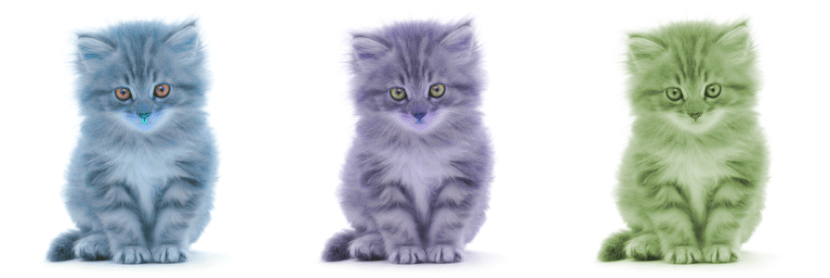 …and then there’s a kindle of kittens